The Parable of the Talents stands as one of Scripture’s most misunderstood teachings about money and responsibility, and it is the passage most often pressed into service by both sides of the argument our guide to biblically responsible investing lays out. For centuries, Christians have debated what Jesus meant when he told the story of three servants entrusted with their master’s wealth—and whether his message has anything to do with modern financial investment at all. This article explores the full theological depth of this parable, its economic context, its primary spiritual meaning, and the legitimate but limited ways it informs a Christian approach to investing.
The Biblical Texts: Matthew 25 and Luke 19
Jesus presented versions of this parable near the end of his ministry, recorded in both Matthew and Luke. Understanding both accounts reveals the layers of his teaching.
Matthew 25:14-30
In Matthew, Jesus sets the stage explicitly: “Again, it will be like a man going on a journey, who called his servants and entrusted his wealth to them.” The master gives five talents to one servant, two to another, and one to a third—”to each according to his ability.” While the master is away, the first two servants trade their talents and double them. The third servant digs a hole and hides his single talent.
Upon returning, the master celebrates the productive servants: “Well done, good and faithful servant! You have been faithful with a few things; I will put you in charge of many things.” But he condemns the third servant harshly, calling him “wicked and lazy,” confiscating even his single talent and giving it to the one with ten. Matthew concludes with a stark warning: “For whoever has will be given more, and they will have an abundance. Whoever does not have, even what they have will be taken from them.”
Luke 19:11-27
Luke’s version, told to address messianic expectations, differs in crucial ways. A “man of noble birth went to a distant country to have himself appointed king and then to return.” He distributes the same amount (one mina) to ten servants, telling them to “put this money to work until I come back.” Upon his return, he rewards those who increased their minas—one receiving authority over ten cities, the other over five. The third servant presents the original mina untouched, and the master takes it away, giving it to the first servant.
Notably, Luke includes a political element absent from Matthew: “But his subjects hated him and sent a delegation after him to say, ‘We don’t want this man to be our king.'” This kingdom-politics dimension is essential to Luke’s interpretation.
The Historical Context: First-Century Palestinian Economics
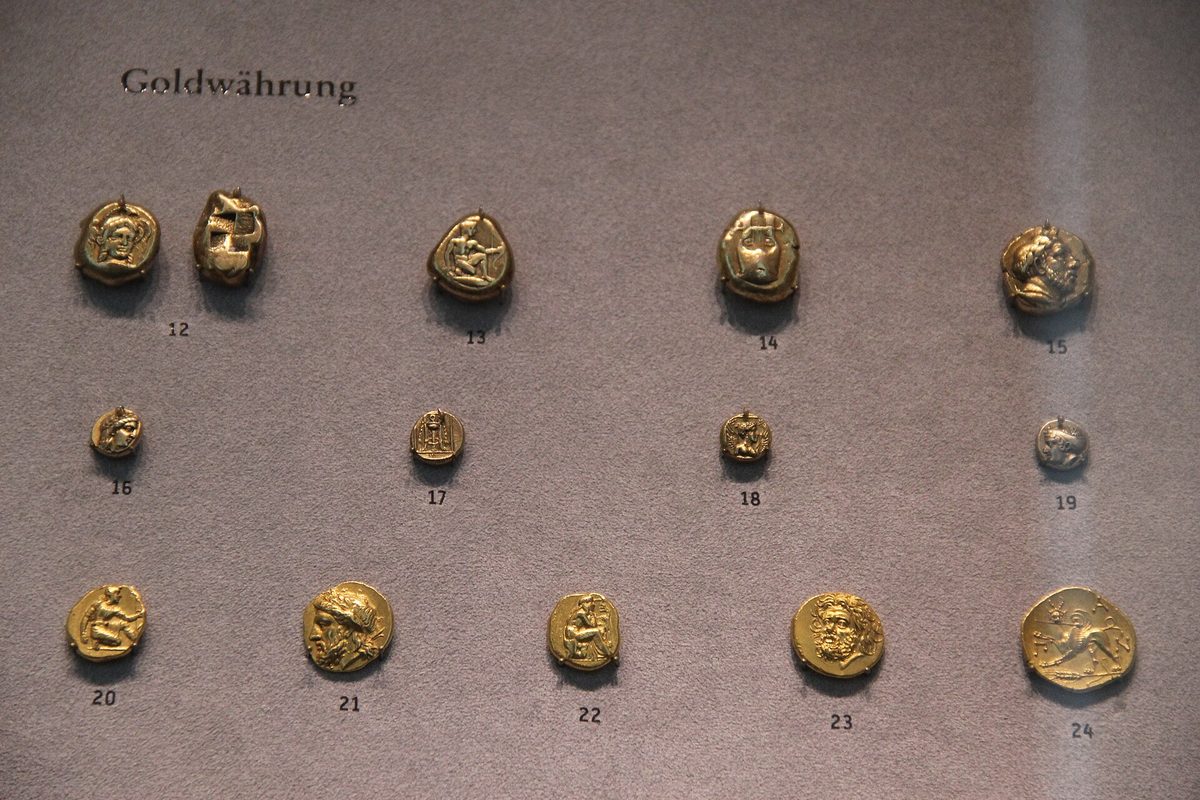
To understand what Jesus meant, we must understand what his audience heard. A talent in the 1st century was an enormous sum—roughly equivalent to six thousand denarii. A denarius was a day’s wage for a laborer. A single talent represented fifteen to twenty years of wages for an ordinary worker. The master in this parable wasn’t distributing “reasonable” sums; he was placing extraordinary wealth in the hands of servants.
The economic world of 1st-century Palestine was not a capitalist system but a patronage system. Wealth flowed through networks of loyalty and obligation. When a master entrusted servants with large sums, he was doing something radical: he was extending trust, granting autonomy, and creating accountability. Servants who increased their master’s wealth might expect reward and responsibility. Those who failed would face consequences.
The practice of burying money, undertaken by the third servant, was actually a legitimate (though inefficient) preservation strategy in a world without banks. Digging a hole and hiding valuables protected against theft, but it generated zero return. The strategy was safe and conservative—but the master rejected it.
The “trading” undertaken by the first two servants likely meant commercial activity: buying and selling goods, perhaps making loans at interest, engaging in commerce. This was how wealth was grown in that economic context. For the master to entrust servants with capital and expect them to “put it to work” meant he expected commercial risk-taking.
What a talent was actually worth
The parable turns on a sum, and almost nobody puts a number on it.
A talent was 6,000 denarii. A denarius was a day’s wage for a labourer — Matthew says so explicitly a few chapters earlier, where the landowner agrees with his workers on a denarius for the day (Matthew 20:2). So one talent represents roughly twenty years of full-time labour, on a six-day week of about 300 working days.
You will often see “sixteen years” published instead. That figure divides 6,000 by 365 — it assumes working every day of the year including the Sabbath, which is an odd assumption in a Jewish parable.
So the master hands over, in modern terms, something like a century of wages to the first servant, forty years to the second, and twenty to the third. For scale, the 10,000 talents owed by the servant in Matthew 18:24 works out to about 200,000 working years — Jesus is not doing accountancy there, he is doing hyperbole.
Two details worth having right. Matthew never names a metal in the word “talent” itself, but the story’s own vocabulary does: verses 18 and 27 say argyrion, silver. And the physical weight of a talent varied by standard — roughly 26 kg on the Attic reckoning, about 29 kg Talmudic, 32 kg Roman. Figures around 45 kg circulate online and correspond to no attested standard.
The Greek repays attention too. Talanton originally meant a balance or a pair of scales, and only later a sum of money — the unit is named after the instrument that weighed it. The servants are douloi, slaves rather than employees, which most modern translations soften. And the famous commendation in verse 21 is just Eu, doule agathe kai piste — “Well, good and faithful slave!” There is no verb in it. “Done” was supplied by translators.
The Primary Theological Meaning: Eschatology, Stewardship, and Accountability
Both Matthew and Luke place this parable in the context of Jesus’s final teachings about the kingdom of God and the end times. This is not primarily an economics lesson—it is an eschatological one.
Preparation for Christ’s Return
The central theological claim is this: Christ’s followers are entrusted with divine gifts during his absence, and they will be held accountable for how they used those gifts when he returns. The “master’s journey” represents the span between the resurrection and the final judgment. Believers are not passive caretakers; they are active stewards expected to develop and multiply what they have been given.
Matthew’s context reinforces this: he includes the parable within a discourse about “signs of the end of the age.” Jesus is preparing his disciples for a period of waiting and watchfulness. The parable answers the question: what should you do while you wait? The answer is not passivity or fearful preservation, but faithful, productive engagement.
Luke’s emphasis on kingship and political opposition adds another layer. Luke’s audience might have been tempted to reject Jesus’s kingdom as a failure, since he was executed and the Roman Empire continued. Luke uses the parable to say: the master went away to receive a kingdom despite opposition. His return will vindicate those who were faithful in his absence.
Stewardship as Core Identity
The parable teaches that followers of Christ are never ultimate owners of anything. Everything belongs to the master. What we have is entrusted to us “according to our ability”—which the parable understands as our capacity and calling. Stewardship is not a side concern for Christians; it is central to discipleship. How we handle what we have been given reflects our relationship to God.
Accountability and Judgment
The parable does not shy away from judgment. The master returns and calls each servant to account. The productive servants are rewarded. The unproductive servant is not corrected but condemned as “wicked and lazy” and cast into outer darkness. This is serious language about serious consequences. For Matthew’s audience, living under Roman occupation and facing persecution, this would have been a powerful affirmation: God sees. God judges. Unfaithfulness matters eternally.
Financial Investing Versus Spiritual Preparation: Why the Parable Is Not Primarily About Money Management
At this point, we must be direct: the Parable of the Talents is not primarily about financial investment strategy, stock portfolios, or retirement planning. It would be proof-texting to use this passage as your primary biblical foundation for an investment philosophy.
The parable’s main concern is theological, not financial. It speaks to preparation for eternity, faithful stewardship of all gifts (time, talents, spiritual gifts, opportunities, relationships), and accountability before God. The medium of the parable happens to be money because money is a universally understood measure of value and responsibility. But the message transcends finances.
Nevertheless, this does not mean the parable has nothing to teach investors. The parable contains embedded assumptions about economics and responsibility that do have legitimate applications to modern financial decisions. We must extract these carefully and humbly.
Embedded Principles with Financial Application
Productive Stewardship Versus Fearful Hoarding
The most striking contrast in the parable is between the first two servants, who actively put their talents to work, and the third, who buried his. The master does not reward safety; he rewards productivity. The third servant’s rationale is telling: “I was afraid, and went out and hid your talent in the ground.”
Fear was his excuse, but the master rejected it. “You knew that I reap where I have not sown and gather where I have not scattered seed. So you should have put my money on deposit with the bankers, and on my return I would have received it back with interest.” Even this minimum expectation—leaving the money with bankers to earn simple interest—would have been acceptable. But hoarding out of fear was not.
For Christian investors, this teaches that some degree of productive engagement with capital is expected. Sitting entirely on the sidelines, paralyzed by fear or by a false spirituality that rejects financial involvement, may not be faithful stewardship. The parable acknowledges legitimate risk (the first two servants risked capital) but condemns risk-aversion masquerading as piety.
This does not mean reckless gambling or speculation. The master’s question—”Why didn’t you at least put my money on deposit?”—suggests a graduated response to risk tolerance. There are basic, lower-risk options (banking) and higher-risk options (trading). A faithful servant knows his ability and acts accordingly.
Risk-Taking as Faithful Stewardship
The parable implicitly endorses risk-taking as part of faithful stewardship. The servants who doubled the master’s capital were not guaranteed to succeed. They took calculated risks in commercial ventures. The master did not punish them for the possibility of loss; he rewarded them for the actual return.
This is countercultural in Christian circles that sometimes treat all financial risk as sinful presumption. The parable suggests otherwise. Growth requires risk. The question is not whether to take risk, but what kinds of risks are proportional to your responsibility and ability.
Proportional Responsibility
Notice that each servant received “according to his ability.” This is not arbitrary inequality; it is calibrated responsibility. The five-talent servant was expected to produce something; the one-talent servant faced a different expectation. Yet all were expected to be productive.
For modern investors, this suggests that different people have different capacities for risk, expertise, and responsibility. A young person with decades until retirement and specialized financial knowledge might reasonably engage in diversified investing. Someone near retirement or without financial knowledge might pursue lower-risk, simpler strategies. The parable does not mandate a single approach; it mandates that whatever you do, you do it faithfully according to your ability.
The Problem of the “Wicked and Lazy” Servant
The master’s condemnation of the third servant—”wicked and lazy”—is not simply about underperformance. It is about a failure of stewardship rooted in distrust and disobedience. The servant had a false theology of his master: “I knew you are a hard man, harvesting where you have not sown and gathering where you have not scattered seed.” This master, he thought, was unjust and demanding.
But the parable suggests this was a misreading. The master was generous in entrusting wealth. He did not demand impossible returns. He was reasonable. The servant’s hoarding was based on a lie about the master’s character. For Christians, this is deeply convicting: Do we misunderstand God? Do we limit our engagement with God’s gifts because we harbor false beliefs about his character? Do we assume God is stingy, demanding, or impossible to please?
The parable teaches that God is generous with opportunity. He entrusts us. He expects productivity, yes, but he is not unjust in that expectation. The servant’s sin was not merely losing money (had he tried and failed, the parable gives no indication he would have been condemned); it was refusing to try, rooted in a fundamental distrust of the master’s goodness.
Compound Interest Through a Biblical Lens
The parable mentions a specific mechanism of growth: the first two servants doubled their capital. This likely represents the compounding effect of multiple transactions and returns over time. In the parable, five talents became ten; two became four. This is not instantaneous; it represents the accumulation of smaller transactions over the master’s absence.
Compound interest is a mathematical reality that the biblical authors understood, even if they did not use modern terminology. Proverbs celebrates the diligent and productive: “The sluggard craves and gets nothing, but the desires of the diligent are fully satisfied” (Proverbs 13:4). Ecclesiastes shows awareness of diversification and the variability of returns: “Invest in seven ventures, yes, in eight; you do not know what disaster may come upon the land” (Ecclesiastes 11:2).
The Parable of the Talents fits into this wisdom tradition. It acknowledges that wealth, when engaged productively, tends to multiply. This is not magic or greed; it is the natural result of putting capital to work. The parable does not celebrate wealth for its own sake, but it does celebrate the productive use of what one has been entrusted with.
The detail that reverses the parable
Here is the piece almost no treatment of this parable includes, and it cuts against the obvious reading.
Burying money was not negligence in this world. It was the recognized method of safekeeping. The Talmud preserves the principle bluntly — “there is safeguarding for money only in the ground” — and reasons about how deep it must go to count as hidden. The same discussion records Rabbi Yitzhak’s advice to divide your money three ways: a third buried, a third in business, a third to hand. That is a diversification rule from late antiquity.
Meanwhile the Mishnah makes a custodian who ties entrusted coins in a cloth and slings it over his shoulder liable for the loss, because that is not how a careful bailee stores money.
Now compare the two servants. Matthew’s third servant digs a hole and hides the silver — the protected, prudent method. Luke’s wraps his mina in a soudarion, a sweat-cloth, the same word used of a burial face-cloth in John’s Gospel — the method that makes a custodian liable.
And the outcomes run backwards. Matthew’s servant, who did the safe thing, is thrown out. Luke’s servant, who did the negligent thing, merely loses the mina. The Gospels invert the severity you would expect from the surrounding legal reasoning.
That reversal is the point. The master is not evaluating custodial technique. He is evaluating whether the servant understood what kind of master he had — and the third servant’s own defence gives him away: “I knew that you are a hard man.” He acted on a picture of God as someone to be protected against rather than trusted.
One honest caveat, since precision matters here. The clearest rabbinic statements on burial come from a third-century Babylonian teacher, not from first-century Galilee. They show the direction Jewish legal reasoning took, not a statute Jesus’ first hearers could quote.
Two smaller specifics. The bankers of verse 27 are trapezitai — literally “table men,” named for the counter they worked at — and they are a distinctly higher class of financier than the money-changers Jesus drove out of the temple. The word for interest, tokos, literally means “offspring”: money that gives birth. And there is a real tension in the master’s suggestion, since Israelite law forbade charging interest to a fellow Israelite while permitting it to a foreigner. Commentators split on whether the master’s advice is a moral endorsement or simply how the character in the story would think.
Luke’s version carries a further layer. Its frame — a nobleman travelling to a distant country to receive a kingdom, opposed by a delegation of his own subjects — closely tracks events his hearers remembered. In 4 BC Herod’s son Archelaus sailed to Rome to claim his father’s throne, and a delegation of fifty ambassadors, joined by some eight thousand Jews already in the city, went to oppose him. Augustus confirmed the will but withheld the title of king. Luke places the parable near Jericho, where Archelaus had a palace.
Different Theological Interpretations
Christians have interpreted the Parable of the Talents in varied ways, each revealing different emphases in their theology.
Conservative Evangelical Interpretation
Evangelical commentators typically emphasize individual responsibility, accountability, and the reward of faithfulness. They highlight the one-to-one relationship between steward and master, and they focus on the personal judgment each servant faces. In this reading, the parable is about maximizing potential and not letting fear prevent you from fulfilling your calling. This interpretation has naturally led some evangelical teachers to apply the parable to financial investing and entrepreneurship, seeing capital growth as a form of faithful stewardship.
Liberation Theology Perspective
Liberation theologians have raised important critiques. They note that the parable takes for granted the master’s ownership and the servants’ subordination. In their reading, the parable should not be abstracted from the political and economic systems of oppression in the 1st-century world. Jesus’s point may not be to endorse the master-servant system, but to critique it through irony. The parable may be exposing the cruelty of a system that demands profit even from the powerless. In this view, Christians should use the parable not as an endorsement of wealth-seeking, but as a critique of exploitative economic systems.
Mainline Protestant and Progressive Interpretation
Some mainline and progressive commentators emphasize the parable’s critique of fearful withdrawal from the world. They stress that Christians are called to engage actively in God’s work, using their gifts courageously. However, they also highlight warnings about greed and the dangers of wealth. In this reading, the parable teaches engagement and risk-taking, but always in service of God’s kingdom values, not personal accumulation. The reward structure in the parable—the faithful servants placed “in charge of many things”—is understood as expanded opportunity to serve, not personal enrichment.
Connection to Broader Biblical Financial Teaching
Wisdom and Diligence in Proverbs
Proverbs is the Bible’s wisdom literature on economics. It celebrates diligence: “All hard work brings a profit, but mere talk leads only to poverty” (Proverbs 14:23). It warns against laziness: “Sluggards do not plow in season; so at harvest time they look but find nothing” (Proverbs 20:4). This is not about greed; it is about responsibility and the natural consequences of your choices. The Parable of the Talents sits comfortably within this wisdom tradition.
Diversification in Ecclesiastes
Ecclesiastes 11:2 advises: “Invest in seven ventures, yes, in eight; you do not know what disaster may come upon the land.” This is an explicit endorsement of diversification as a hedge against uncertainty. Ecclesiastes understands that life is unpredictable, and prudent stewardship means spreading risk. The Parable of the Talents (in its distribution of different amounts to different servants) implicitly assumes different risk profiles and abilities.
Warnings About Wealth and Greed
The Bible also contains sharp warnings about wealth and the dangers of greed. Jesus taught: “No one can serve two masters. Either you will hate the one and love the other, or you will be devoted to the one and despise the other. You cannot serve both God and money” (Matthew 6:24). Paul wrote: “For the love of money is a root of all kinds of evil” (1 Timothy 6:10). The Parable of the Talents must be read in conversation with these warnings. Productive stewardship is not the same as the pursuit of wealth as an ultimate good.
Modern Applications for Christian Investors
Intentional Stewardship
The first modern application is simple: do not be passive with what you have been entrusted. If you have capital, whether significant or modest, stewardship demands that you engage with it thoughtfully. This means having an investment plan, not merely drifting. It means understanding your investments to the degree that your ability allows. It means periodic review and rebalancing. Stewardship is an active posture.
Risk-Taking Proportional to Your Ability
The parable does not mandate that everyone be equally aggressive with their capital. But it does mandate that everyone do something. For some, this might mean a diversified portfolio of index funds. For others, it might mean starting a small business or making targeted investments. For still others, it might mean supporting entrepreneurial friends or family members. The key is proportion: you should take risks commensurate with your knowledge, time capacity, and financial position.
Long-Term Thinking
The parable’s emphasis on the master’s return and the accumulation of returns over time reflects a long-term perspective. For investors, this means resisting short-term speculation and thinking in terms of decades. Compound growth requires time. The parable suggests that fidelity over decades, through various market conditions, is the expected posture.
Accepting That You Don’t Control Outcomes
The parable neither assumes nor requires that all servants will succeed equally. The first two servants did well, but the parable does not suggest they had perfect certainty of success. What matters is that they tried, using their ability faithfully. For modern investors, this means accepting that you cannot control markets, economic cycles, or global events. What you can control is your effort, your strategy, your discipline, and your integrity. Faithfulness is not measured by returns alone; it is measured by faithful engagement with what you can influence.
What the Parable Does NOT Justify
Greed and Accumulation for Its Own Sake
The parable should never be weaponized to justify greed. The goal of stewardship is not to hoard wealth but to use it faithfully. For a Christian investor, the question is not simply, “How much can I accumulate?” but rather, “How can I steward what I have been given in a way that honors God and serves his kingdom?” This might mean generosity, investment in others’ flourishing, or supporting causes aligned with biblical justice.
Exploitation and Oppression
The parable must not be used to justify extractive or exploitative economic practices. The master in the parable is just and generous, not exploitative. Christian investors should never use the parable as cover for cheating employees, exploiting workers, or engaging in predatory lending. If anything, the parable’s emphasis on accountability before God should make Christians especially scrupulous about the ethical dimensions of their investments and business practices.
The Prosperity Gospel
The Parable of the Talents is sometimes co-opted to support prosperity gospel teaching—the idea that financial success is a sign of God’s favor and that God promises wealth to believers. This is a fundamental misreading. The parable teaches faithful stewardship, not guaranteed wealth. Some faithful stewards may experience economic loss through no fault of their own. The parable’s focus is on faithfulness, not on material success as a sign of spiritual maturity.
Risk-Taking Without Regard to Others
The parable does not justify reckless risk-taking that endangers others’ wellbeing. If your “investment” strategy involves gambling with resources entrusted to you by family members or clients, or if it exploits others’ vulnerabilities, then it violates the spirit of faithful stewardship, regardless of how much profit it might generate.
A Framework for Faithful Returns
How can a Christian investor think about “faithful returns” in a way that honors both the parable’s teaching and biblical wisdom more broadly?
Define Success Biblically
First, define what success means. For a faithful Christian investor, success is not simply maximum returns. It is stewarding resources in a way that aligns with your values and calling. For some investors, this means choosing investments that support ethical companies or sustainable practices. For others, it means balancing growth with generosity. The question to ask is: “How would I steward this differently if I truly believed I would give an account before God for how I used it?”
Build a Sustainable Strategy
The parable suggests engagement over time. Sustainable strategies compound. This means building an investment approach that you can maintain through various seasons—economic growth and recession, periods of high confidence and periods of doubt. For many investors, this means a diversified approach that balances growth and stability, tailored to your timeline and risk capacity.
Integrate Generosity
The parable does not explicitly address giving, but the broader biblical witness does. A framework for faithful returns includes planned generosity. What portion of your returns will you give away? To whom? How will you support causes and people aligned with biblical justice? Stewardship includes not just growth but also distribution in line with your values.
Practice Integrity in Your Investments
Know what you own. Understand the businesses or funds in which you invest. As much as your ability allows, ensure that your investments do not contradict your values. If you profess to follow Jesus, then investing in companies that exploit workers or extract resources destructively sits uneasily with that profession. Integrity means some level of alignment between your investments and your stated commitments.
Accept Accountability
Finally, the parable teaches accountability. For a Christian investor, this means regular review not just of returns, but of stewardship. Are you being faithful with what you have been entrusted with? Are you engaging thoughtfully or passively? Are your investments aligned with your values? Are you generous? Are you using your capital in ways that reflect belief in God’s goodness and justice? The annual review of your portfolio should include not just performance metrics but spiritual metrics as well.
Stewardship as Discipleship
Our guide to biblical principles for investing works through the practical side, and stewardship theology takes up the ownership question. The Parable of the Talents, in both Matthew’s and Luke’s versions, teaches that followers of Christ are stewards, not ultimate owners, of what they have been entrusted with. We will be held accountable for how we engage with those gifts. The parable rejects both fearful hoarding and the assumption that growth is optional. It endorses productive engagement proportional to our abilities.
The parable is not primarily about investment strategy. It is about preparation for Christ’s return through faithful engagement with all that we have been given—time, talents, relationships, and resources. Yet it contains embedded principles about productivity, risk-taking, and growth that do have legitimate application to Christian approaches to financial investing.
For Christian investors, the parable invites reflection on this question: Am I stewarding my resources faithfully? Am I engaging them productively, or am I paralyzed by fear? Am I taking risks proportional to my ability and calling? Am I seeking to align my investments with my deepest values? Am I generous with what I have been given? Do I truly believe that I will give an account before God?
These questions point toward a vision of investing where returns are the smaller question and discipleship the larger one. Faithful stewardship—whether of five talents or one—is how we live out our trust in God’s goodness while awaiting his return. In this sense, the Parable of the Talents remains as relevant to modern Christian investors as it was to those first disciples listening on the Mount of Olives two thousand years ago.