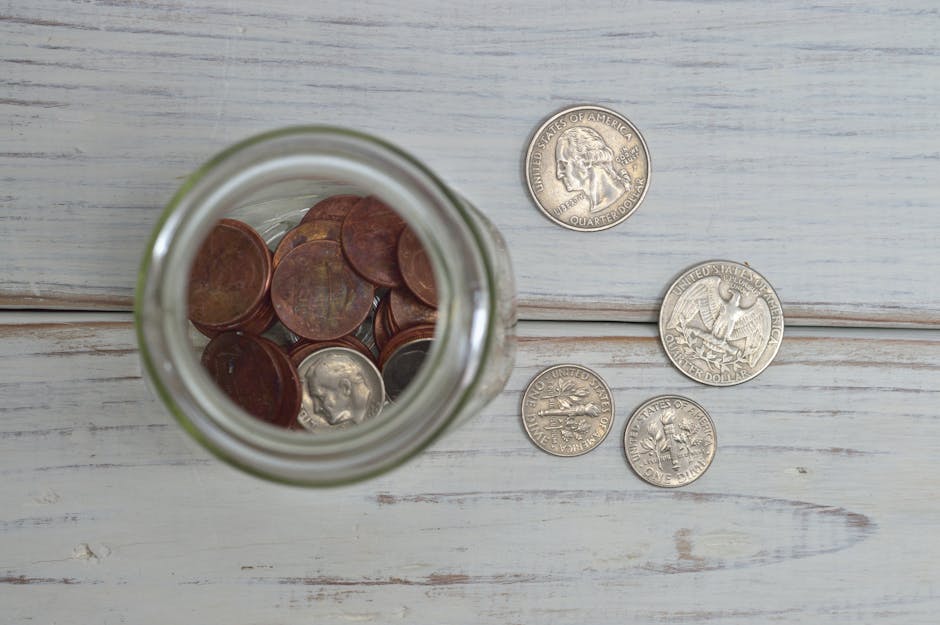
Teaching kids about money the biblical way means teaching two things at once: how the math works, and who the money belongs to. Start young, give them real dollars to manage, split every dollar into give-save-spend, and let them feel small consequences now so they do not learn through expensive ones later.
“Train up a child in the way he should go; even when he is old he will not depart from it” (Proverbs 22:6). That verse is usually quoted about faith, but money habits form the same way — early, through repetition, mostly by watching you. Deuteronomy 6:6-7 tells parents to talk about God’s commands “when you sit in your house, and when you walk by the way,” which is a description of ordinary life: the grocery line, the allowance envelope, the offering plate. This guide gives you the concrete moves by age, anchored in our larger framework for Christian personal finance.
Why This Matters More Than Ever
The data is sobering. Only about 45% of American high schoolers now take a personal-finance course — an improvement from 31% two years earlier, but still less than half. Gen Z posts a financial-literacy rate near 38%, meaning roughly two-thirds of young adults lack the basics. Meanwhile 87% of Americans say they support financial education in schools and 72% wish they had learned it sooner. If your kids are going to learn to handle money wisely and faithfully, the odds say it starts at home.
The Give-Save-Spend System
The single most useful tool is three jars or envelopes labeled Give, Save, and Spend. Every dollar a child receives — allowance, birthday cash, money from chores for hire — gets divided among the three. A common starting split is 10% give, 40% save, 50% spend, and many Christian families bump the giving share higher to make generosity the first habit, not the leftover one.
This simple act teaches “Honor the Lord with your wealth and with the firstfruits of all your produce” (Proverbs 3:9) before a child can spell “firstfruits.” Giving comes off the top, not the bottom. As kids grow, the categories can get more granular — short-term saving for a specific goal versus long-term saving they do not touch. The principle stays the same: money has a job before it has a chance to disappear. For the grown-up version of this discipline, see our guide to Christian budgeting.
What to Teach at Each Age
Kids cannot absorb everything at once. Match the lesson to the stage.
| Age | Core lesson | What it looks like |
|---|---|---|
| 3-5 | Money is earned and traded | Coins in a clear jar; choose one small item at the store |
| 6-8 | Give, save, spend | Three jars; divide every dollar; give at church themselves |
| 9-12 | Goals and patience | Save toward a wanted item; open a real bank account; earn extra for extra work |
| 13-15 | Budgeting and first investing | Track money in/out; learn compound growth; first custodial investments |
| 16-18 | Adult systems | Checking account, debit card, taxes on a first job, college costs |
Notice the progression from concrete to abstract. A five-year-old needs to see coins; a sixteen-year-old needs to feel the sting of a first paycheck shrunk by taxes. The earlier band builds the habit, the later bands build the skill.
The Allowance Question
Parents argue endlessly about allowance. A workable guideline is $0.50 to $1.00 per week for each year of age, so a seven-year-old gets roughly $3.50 to $7.00 and a twelve-year-old gets $6.00 to $12.00. The most effective setup pairs a small base allowance with chances to earn more through extra work.
Keep one distinction clear: ordinary family chores — making the bed, clearing dishes, homework — are responsibilities of belonging to the household, not paid services. “Whatever you do, work heartily, as for the Lord” applies to unpaid duties too. Pay for genuinely extra jobs, and resist withholding allowance as punishment for unrelated misbehavior; use other consequences and keep money lessons about money.
Make Compound Interest Unforgettable
Nothing sells saving like watching money multiply. The penny-doubling exercise does it in two minutes. Ask your child: would you rather have $1 million today, or a single penny that doubles every day for 30 days? Most pick the million. Then do the math together — after 10 days the penny is worth $5.12, after 20 days it is $5,242.88, and on day 30 it reaches $5,368,709.12, more than five times the million. The lesson sticks for life.
For teens, make it personal. Invest $100 a month starting at age 15, earn an average 8% a year, and you land near $1 million by 65. Wait until 25 to start and you would need almost $200 a month to reach the same place — a vivid argument for starting now. Teach them the Rule of 72 (divide 72 by the return to see how fast money doubles; at 8% that is roughly every nine years), and show that $1,000 invested at age 15 could grow to about $32,000 by 60 without adding a dime. With some youth savings accounts paying 5-7% APY in 2026, even their own bank balance can demonstrate growth they can watch. When the time comes to invest for real, our overview of 529 college savings plans covers the most common first account for a child’s future.
Teaching Giving and Contentment
Generosity is caught more than taught. Let your kids put their own giving jar into the offering, not just watch you do it. Tell them about the widow who “out of her poverty has put in everything she had” (Mark 12:41-44) — Jesus measured her gift by her heart, not the amount. Pair that with “God loves a cheerful giver” (2 Corinthians 9:7) so giving feels like joy, not tax.
Then teach contentment as the counterweight to a culture built on wanting more. Paul “learned in whatever situation to be content” (Philippians 4:11-13), and “godliness with contentment is great gain” (1 Timothy 6:6-8). When a child blows the whole spend jar on candy and then wants a toy, the kindest move is often to let them sit in that disappointment rather than rescue them. The small ache now teaches a lesson a lecture never could. Our pieces on tithing and giving and generosity and wealth go deeper for the whole family.
Common Mistakes Parents Make
- Doing money in secret. Kids learn from what they see. Let them watch you budget, give, and even say “we can’t afford that right now.” Modeling beats lecturing every time, a theme in our guide to biblical stewardship.
- Rescuing every mistake. Bailing out a blown allowance erases the lesson. Small failures now prevent large ones later.
- Paying for everything. If kids never earn, they never connect work with reward — the dignity of labor Proverbs ties to provision (Proverbs 10:4).
- Skipping debt. Older teens need to understand interest before their first credit-card offer arrives. “The borrower is the slave of the lender” (Proverbs 22:7) lands harder with a worked example; our guide to debt from a biblical view helps.
Tie Money to Faith at the Kitchen Table
The lessons stick when money and faith are discussed in the same breath, not in separate compartments. Keep a simple rhythm of family conversations — at dinner, in the car, around a monthly giving decision — where the money question and the God question sit together. “The earth is the Lord’s, and everything in it” (Psalm 24:1) reframes the whole project: you are not raising owners, you are raising managers of what already belongs to God.
The parable of the talents (Matthew 25:14-30) is perfect material for older kids. The master entrusts different amounts, expects them invested rather than buried, and commends the servants who took faithful risk. Walk through it and ask your child what they think they are being trusted with right now — their allowance, their time, a skill. Naming themselves as stewards, not just spenders, changes how a teenager thinks about a paycheck. Even a five-minute talk repeated often does more than a single big lecture, because formation happens through repetition, exactly the pattern Deuteronomy 6 describes.
Frequently Asked Questions
What age should I start teaching my kids about money?
As early as three. A toddler can put coins in a clear jar and pick one small item at the store. The concepts grow with the child: jars and giving around six, real bank accounts and goals by ten, budgeting and first investments in the teen years. Starting early matters more than starting perfectly.
Should allowance be tied to chores?
Partly. Pay for genuinely extra work, but treat ordinary family chores as unpaid responsibilities of belonging to the household. A small base allowance plus earning opportunities gives kids steady money to practice giving and budgeting while still connecting effort with reward. Avoid using allowance as punishment for unrelated behavior.
How do I teach giving without it feeling forced?
Make it visible and joyful. Have children place their own giving jar in the offering, talk about where the money goes, and celebrate the act rather than the amount. Anchoring it in the widow’s mite and the “cheerful giver” verse helps kids see generosity as worship, not a rule imposed from above.